The Role of Triple Eccentric Butterfly Valves in Improving Industrial Fluid Control
A useful reference for buyers studying how triple eccentric valve design supports flow control duties in industrial pipeline systems.
Read TJL article

ISO 5752 Series 13 Valve Sourcing
TJL Industry Group supplies ISO 5752 Series 13 triple eccentric butterfly valves for overseas buyers who need a practical basis for valve comparison, distributor stock planning, and project RFQs. The product page lists BS EN593, BS5155, API609, DIN3354, ISO 5752, BS EN558, ASME B16.10, AWWA C207, DIN 2501, EN1092, EN12266-1, API 598, and ISO5208 references, giving procurement teams a clear starting point for technical review.
For an engineering buyer comparing a butterfly valve supplier, the main checks are not limited to price. Nominal diameter, pressure class, flange drilling, sealing ring structure, actuator interface, inspection standard, and shipment documentation all affect whether the valve can move smoothly from sample review to project supply.
Teams reviewing Butterfly valve manufacturers can use this page to organize the facts visible on the TJL product listing, including DN100-DN2600 coverage, fresh water, sewage, sea water, and air service, as well as the listed -10 degrees C to 100 degrees C applicable temperature range.
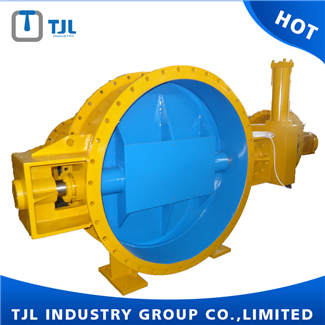
This ISO 5752 Series 13 triple eccentric butterfly valve is positioned for fluid pipeline shutoff and flow control duties where buyers need clear dimensional, flange, and inspection references. The product structure notes include an ISO5211 driving device flange, adjustable upper shaft sealing with NBR rings, ductile iron body, eccentric disc structure, replaceable sealing ring, stainless steel seat area, double half shaft stem design, copper alloy shaft sleeve, and cylindrical pin torque transfer.
| Specification | Details |
|---|---|
| Product Name | ISO 5752 Series 13 Triple Eccentric Butterfly Valve |
| Design Standard | BS EN593, BS5155, API609, DIN3354 |
| Face-to-Face Dimension | ISO 5752 Series 13 and 14, BS EN558 Series 13 and 14, API609, DIN3202, ASME B16.10 |
| Flange Connection | AWWA C207, DIN 2501 PN10-16-25, EN1092 PN10-16-25 |
| Inspection and Test | EN12266-1, API 598, ISO5208 |
| Nominal Diameter | DN100-DN2600 listed performance range |
| Nominal Pressure | 0.6, 1.0, and 1.6 MPa listed groups |
| Seal Test Pressure | 0.66, 1.1, and 1.76 MPa by pressure group |
| Shell Test Pressure | 0.9, 1.5, and 2.4 MPa by pressure group |
| Applicable Temperature | -10 degrees C to 100 degrees C |
| Applicable Medium | Fresh water, sewage, sea water, air, and similar media |
| Delivery Time | 15-30 days listed on the product page, to be confirmed when ordering |
Listed international design, dimension, flange, and inspection references help overseas buyers prepare comparable RFQs.
DN100-DN2600 coverage supports distributor planning for municipal water, sewage, sea water, and industrial air lines.
Replaceable sealing ring, low-resistance stem arrangement, and stainless steel seat details give engineers concrete structure points to verify.
These TJL articles support technical reading around triple eccentric butterfly valve selection, construction, and difficult service environments.
A useful reference for buyers studying how triple eccentric valve design supports flow control duties in industrial pipeline systems.
Read TJL articleThis article helps procurement teams review construction terms such as body, disc, stem, seat, and sealing parts before RFQ confirmation.
Read TJL articleA focused reading path for buyers comparing valve structure, sealing design, and working conditions in more demanding pipeline services.
Read TJL articleFive-star procurement rating
"The specification references made it easier for our team to compare flange drilling, inspection standard, and pressure class before sending the purchase request."
Procurement Manager, Waterworks Distributor, Chile
Five-star procurement rating
"For large diameter valve sourcing, we needed clear DN range, seat details, and test pressure notes. The product data gave our engineers a practical first review."
Project Buyer, Pipeline Contractor, Saudi Arabia
Five-star procurement rating
"The ISO 5752 and EN1092 references helped us align the inquiry with our European customer files before asking for drawings and packing information."
Technical Sourcing Lead, Industrial Valve Importer, Poland
Buyers should confirm nominal diameter, nominal pressure, face-to-face standard, flange drilling, test standard, medium, operating temperature, actuator interface, and installation orientation. For this product series, the listed references include ISO 5752 Series 13 and 14, BS EN558 Series 13 and 14, API609, DIN3202, ASME B16.10, EN12266-1, API 598, and ISO5208.
The eccentric disc and sealing design are intended to build sealing pressure while reducing friction on the sealing ring. For procurement teams, that means the RFQ should not only ask for size and pressure, but also request structure details, sealing ring material, seat design, stem arrangement, and test records for the selected working condition.
The product information lists fresh water, sewage, sea water, air, and similar media. The final selection should still be checked against pressure, temperature, concentration, flow rate, and any solids or corrosion risk in the project, because media conditions can change the suitable seat, sealing, and body material choices.
The buyer should provide the flange standard, pressure class, drilling requirement, gasket requirement, and connected pipe standard in the RFQ. The listed flange references include AWWA C207, DIN 2501 PN10-16-25, and EN1092 PN10-16-25, so drawings or a dimensional confirmation sheet should be reviewed before purchase order release.
Useful inspection information includes hydrostatic shell test, seal test, applicable EN12266-1, API 598, or ISO5208 reference, visual inspection records, marking details, packing photos, and batch traceability notes. These records help distributors match incoming goods with customer project files and reduce receiving disputes.
No single model should be assumed to fit every project. The listed DN100-DN2600 range and -10 degrees C to 100 degrees C temperature range provide a useful starting point, but the final choice should be confirmed by pressure class, medium, flange standard, actuator type, installation space, and project testing requirements.

;)
;)