
- Home
- >
- About Us

Option A Procurement Page
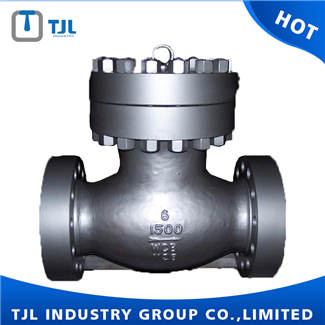
6 Inch ANSI Class 1500 Swing Check Valve Supplier for Industrial Projects
Buyers comparing high-pressure backflow control options for refinery, chemical, fertilizer, pharmaceutical, and power-generation lines can review API and ASME reference standards, a listed 15-30 day delivery window, and multiple material configurations that support project-specific selection.
Teams screening a check valve supplier or a check valve manufacturer can use the visible product scope to focus discussions with TJL on body material, end connection, service media, and operating conditions.
Design Basis
API 6D / ASME B16.34 / BS1868
Testing
API 598 and API 6D References
Lead Time Shown
15-30 Days
Media and Specifications
Review the supplied product video together with the core product data, then compare standards, pressure range, temperature range, and visible material options before sending a project inquiry.
Description
This 6 inch swing check valve is presented by TJL for high-pressure piping systems where reverse-flow control, sealing stability, and repeatable installation standards matter during procurement. The visible source data points to industrial use across oil, chemistry, pharmaceutical, fertilizer, and power generation service lines, with reference standards covering design, flange connection, face-to-face dimensions, and inspection. For project buyers, that gives a practical starting point for RFQ review before confirming full drawings, material grade, and service-media compatibility.
Product Specifications
| Item | Visible Product Data |
|---|---|
| Product Name | 6 Inch ANSI Class 1500 Swing Check Valve |
| Design Standard | API 6D / ASME B16.34 / BS1868 |
| Face-to-Face Dimension | ASME B16.10 and API 6D |
| Flange Connection | ASME B16.5 and ANSI B16.47 |
| Inspection and Test | API 598 and API 6D |
| Working Pressure Range Mentioned | PN1.6-42.0 MPa |
| Working Temperature Range Mentioned | -46 C to 570 C |
| Material Options Shown | WCB, CF8, WC6, and LCB-based configurations in the visible materials table |
| Delivery Time | 15-30 days |
| Application Fields | Oil, chemistry, pharmaceutical, fertilizer, and power generation |
Core Supply Advantages
Reference standards on the source page help project teams align the valve with existing piping specifications before formal technical clarification.
The visible material combinations support early evaluation for corrosion resistance, pressure duty, and temperature range when buyers compare offers.
The Contact Us path and product source page make it easy to move from shortlisting into RFQ discussion without relying on email-only calls to action.
Related Articles for Buyers
Maximum Operational Efficiency with 6 Inch ANSI Class 1500 Swing Check Valve
This article focuses on backflow prevention, sealing behavior, material choices, and connection flexibility for high-pressure installations where operating continuity is a purchasing priority.
Read ArticleInnovations in Check Valve Design for High-Pressure Applications
The page reviews welded sealing surfaces, self-tightening structures, and inside-set bolt-bearing layouts that matter when a project team compares long-service valve construction.
Read ArticleFactors Influencing Procurement of Swing Check Valves in Chemical and Power Industries
Buyers can use this reference to compare pressure and temperature suitability, standards compliance, and configurable design details before moving to final project confirmation.
Read ArticleVerified Procurement Feedback
★★★★★
Pipeline Procurement Manager, United Arab Emirates
Our review team needed a high-pressure check valve source with clear reference standards and visible material options. This page gave us enough technical structure to move into project discussion quickly.
★★★★★
Mechanical Engineer, Indonesia
The standards, pressure range, and testing references were presented in a format that worked well for our internal comparison sheet and early technical review.
★★★★★
Valve Category Buyer, Chile
We often compare several valve sources at once, so having delivery timing, application industries, and visible material combinations on one page helped our shortlisting process stay efficient.
FAQ
What standards are referenced for this 6 inch ANSI Class 1500 swing check valve?
The visible product page references API 6D, ASME B16.34, BS1868, ASME B16.10, ASME B16.5, ANSI B16.47, API 598, and API 6D. These references give purchasing teams a strong early checkpoint for matching design, dimensional, flange, and testing expectations with their project documentation.
Which service environments are mentioned for this swing check valve?
The source page states use in oil, chemistry, pharmaceutical, fertilizer, and power generation applications. For procurement, that indicates the product is positioned for demanding industrial lines where reverse-flow control and stable sealing are important decision points.
What material choices are available for project matching?
The materials table on the product page shows multiple combinations including WCB, CF8, WC6, and LCB-based selections across body and trim components. That helps buyers prepare a technical discussion around corrosion conditions, working temperature, and plant material standards before final approval.
How is sealing performance supported in higher-pressure duty?
The product details mention a welded sealing surface for wear resistance, an inside-set bolt-bearing structure to reduce leakage, and a self-tightening structure when pressure is at or above 16.0 MPa. These points are useful when engineers compare valve construction for severe-duty service.
What procurement details are visible before inquiry?
Before contacting TJL, buyers can already review the product name, design references, face-to-face basis, flange connection standards, inspection references, application fields, and a listed 15-30 day delivery window. That supports faster internal review and cleaner RFQ preparation.
Where should buyers send the next project inquiry?
The strongest next step is TJL's Contact Us page. Buyers can submit size, pressure class, body and trim material, flange or welded end preference, service media, working temperature, and quantity so the discussion starts with the right project context.

;)
;)